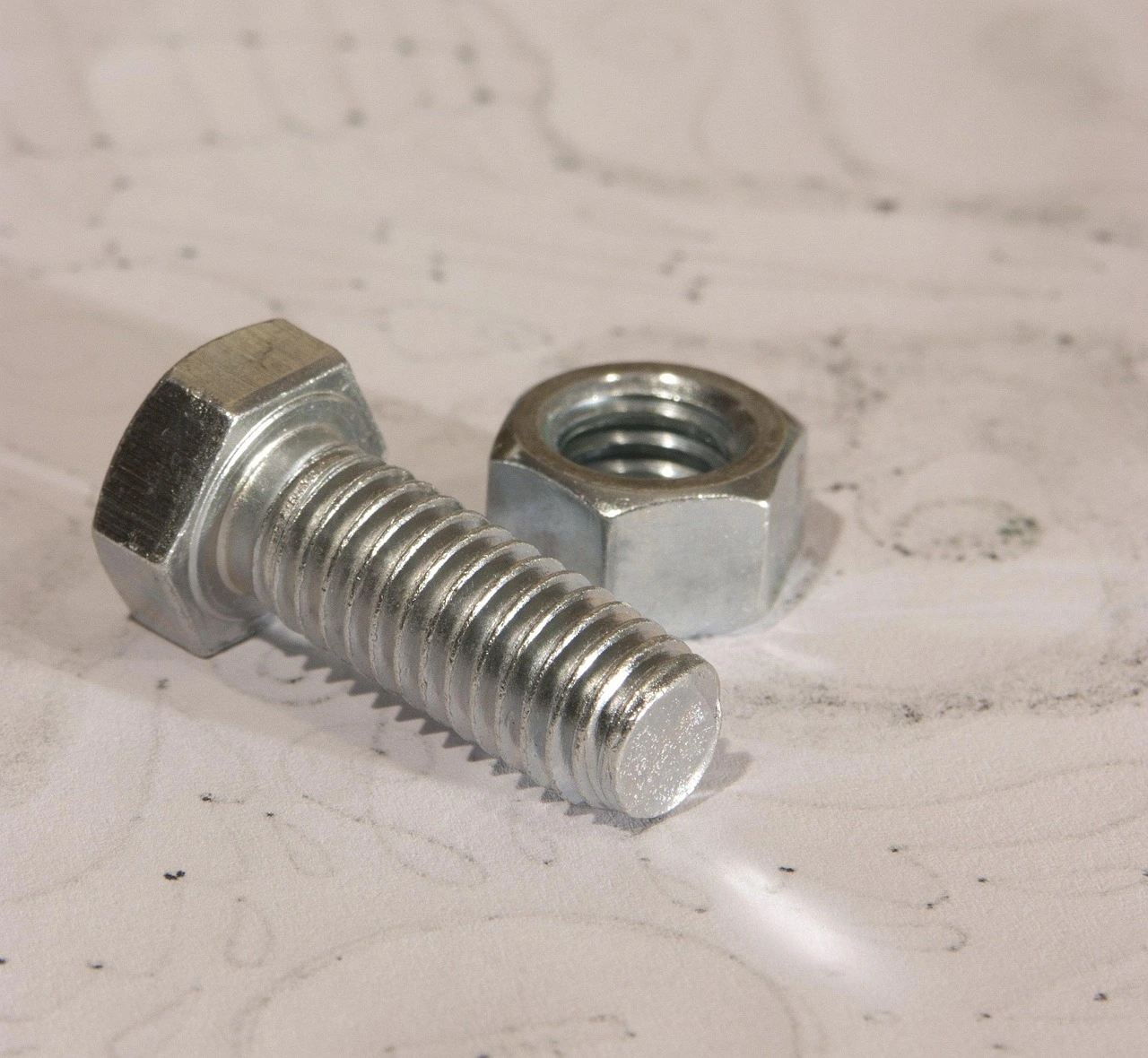
When choosing bolts for machinery, equipment, repairs, fabrication, or other demanding applications, Grade 5 and Grade 8 bolts are two of the most common high-strength SAE fastener grades you’ll encounter.
Both are stronger than general-purpose low-carbon steel bolts, but they aren’t always interchangeable. Grade 8 bolts offer greater tensile, yield, and proof strength, while Grade 5 bolts provide plenty of strength for common mechanical applications.
Understanding the differences between Grade 5 vs. Grade 8 bolts can help you select the correct fastener without paying for strength you don’t need or, more importantly, using a bolt that doesn’t meet your application’s requirements.
What Is a Grade 5 Bolt?
A Grade 5 bolt is a heat-treated, medium-carbon steel fastener manufactured to the mechanical requirements of SAE J429.
Grade 5 bolts are commonly used when an application requires significantly more strength than a general-purpose low-carbon steel fastener, but doesn’t require the higher strength of Grade 8.
What Is a Grade 8 Bolt?
A Grade 8 bolt is a high-strength SAE fastener made from medium-carbon alloy steel that has been quenched and tempered.
Grade 8 bolts provide higher tensile, yield, and proof strength than Grade 5 bolts and are frequently used where the fastener must withstand greater loads.
Is Grade 8 Stronger Than Grade 5?
Yes. Grade 8 bolts are stronger than Grade 5 bolts when comparing fasteners manufactured to their respective SAE J429 requirements.
For common sizes up to 1” in diameter:
- Grade 5 minimum tensile strength: 120,000 psi
- Grade 8 minimum tensile strength: 150,000 psi
That gives Grade 8 approximately 25% greater minimum tensile strength than Grade 5 in those sizes.
The difference in yield strength is even greater:
- Grade 5 minimum yield strength: 92,000 psi
- Grade 8 minimum yield strength: 130,000 psi
However, greater strength does not automatically mean that Grade 8 is the correct choice for every application.
Fasteners should be selected according to the requirements of the joint, equipment manufacturer, engineering specification, or applicable standard. Substituting a different bolt grade without understanding the design requirements can change how a bolted joint behaves.
Grade 5 vs. Grade 8 Bolt Material
One important difference between the two grades is the steel used to manufacture them.
Grade 5 fasteners are generally made from medium-carbon steel and are heat-treated by quenching and tempering to achieve the required mechanical properties. Grade 8 fasteners are made from medium-carbon alloy steel, also quenched and tempered.
The alloy steel used for Grade 8 fasteners allows them to achieve higher strength requirements and provides more consistent hardenability through larger sections.
Grade 5 vs. Grade 8 Bolt Head Markings
Bolt head markings provide one of the easiest ways to distinguish common SAE grades.
Grade 5 bolts are normally identified by three radial lines on the bolt head. These lines extend outward from the center of the head and provide a quick visual indication of the bolt's SAE grade.
Grade 8 bolts are identified by six radial lines on the bolt head. The six-line marking makes them easy to distinguish from Grade 5 bolts, which have three radial lines.
Manufacturer identification markings may also appear on the head. Don’t mistake these marks for grade lines. Fastener heads can contain both grade markings and a manufacturer's identification symbol.
When identifying an unknown bolt, it’s best to verify the complete head marking rather than assuming the bolt grade based only on its appearance or finish.
Does Bolt Color Tell You the Grade?
No.
Although Grade 8 bolts are often associated with a yellow or gold-colored zinc finish in retail environments, color is not a reliable way to determine bolt grade.
A fastener's surface coating and its mechanical grade are different specifications.
Depending on the product, Grade 5 or Grade 8 bolts may be supplied with different finishes or coatings. Always use the head markings and product specifications to determine the bolt grade.
When Should You Use a Grade 8 Bolt?
Grade 8 bolts are commonly used in applications requiring higher strength.
Examples may include:
- Heavy machinery
- High-load mechanical assemblies
- Automotive and equipment applications
- Industrial equipment
- Agricultural machinery
- Applications specifically engineered for Grade 8 fasteners
The important phrase is specifically engineered.
Installing a Grade 8 bolt simply because it’s stronger isn’t a substitute for determining the correct fastener specification.
Can You Replace a Grade 5 Bolt With a Grade 8 Bolt?
Often the answer is yes, but don’t automatically assume you can swap out Grade 5 with Grade 8 just because they’re the same size.
Physically, a Grade 8 bolt of the same diameter, thread, and length may fit where a Grade 5 bolt was installed. But, that doesn’t necessarily make it an appropriate substitution.
Bolt grade affects mechanical properties and can influence the behavior of the entire bolted joint. Other components, including nuts, washers, and the materials being clamped, must also be appropriate for the intended load.
For equipment repairs, structural connections, safety-critical assemblies, or engineered applications, follow the original specification or obtain appropriate engineering guidance before changing grades.
Do Grade 8 Bolts Need Different Nuts?
Yes. The nut must have sufficient strength for the bolt and application.
A high-strength bolt shouldn’t simply be paired with an arbitrary low-strength nut because the nut may become the weak component in the connection.
SAE fastener systems include corresponding nut specifications and grades designed for appropriate combinations.
When ordering bolts, nuts, and washers for an assembly, verify that all components meet the required specifications, not merely the bolt.
Grade 5 or Grade 8: Which Should You Buy?
Choose the grade required by the application.
A simple comparison is:
Choose Grade 5 when:
- The application specifies Grade 5.
- Grade 5 provides the required strength.
- You are replacing an existing Grade 5 fastener according to the original specification.
Choose Grade 8 when:
- The application specifies Grade 8.
- Higher tensile, yield, or proof strength is required.
- The equipment or engineering specification calls for a Grade 8 fastener.
Don’t choose between Grade 5 and Grade 8 based solely on price or the assumption that stronger is always better.
The correct fastener must have the proper grade, diameter, thread, length, finish, and configuration for the application.
The Bottom Line
The main difference between Grade 5 and Grade 8 bolts is strength.
Grade 5 bolts are heat-treated medium-carbon steel fasteners that provide high strength for a wide range of machinery, equipment, automotive, maintenance, and fabrication applications.
Grade 8 bolts are made from heat-treated medium-carbon alloy steel and provide significantly higher tensile, yield, and proof strength.
