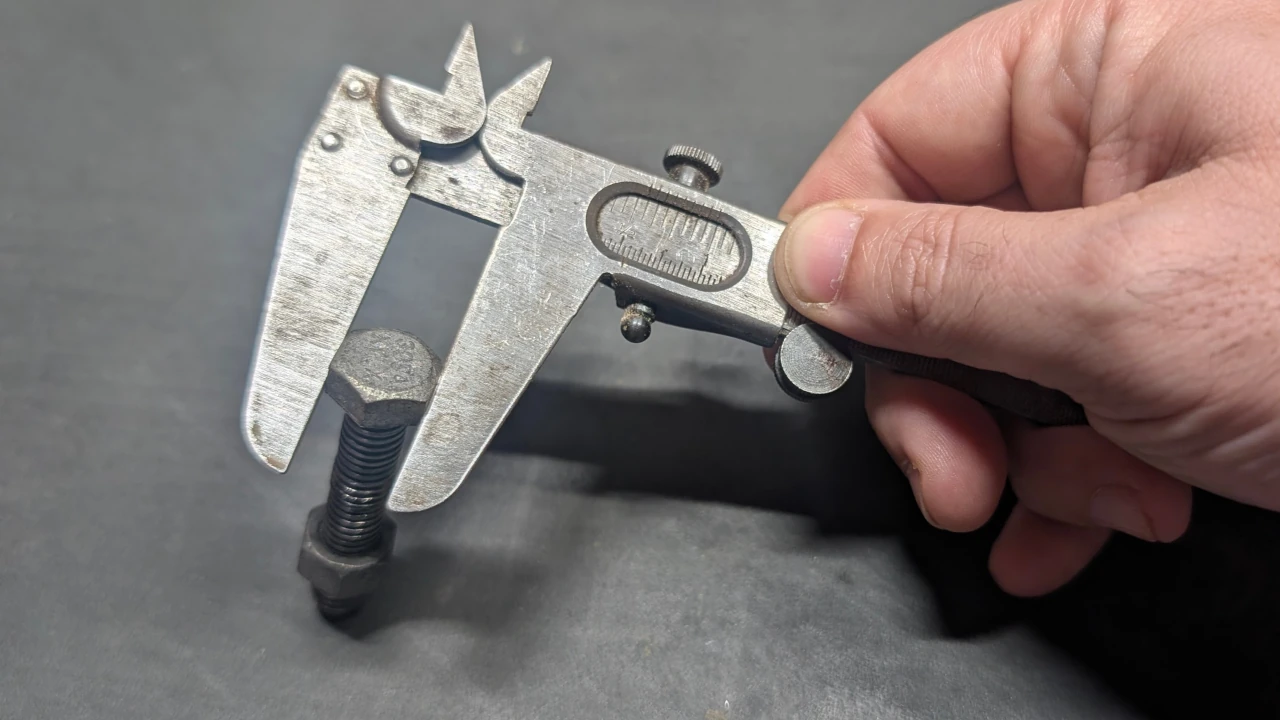
Knowing how to measure a bolt correctly is essential when replacing hardware or ordering bolts in bulk. A bolt that is only slightly different in diameter, thread pitch, or length may not fit properly, even if it looks almost identical to the original.
Fortunately, identifying a bolt size is straightforward once you know which measurements matter. For most bolts, you need to determine three basic dimensions: diameter, thread pitch or threads per inch, and length.
Measure the Bolt Diameter
The first measurement is the nominal diameter of the threaded shaft.
For inch-size bolts, common diameters include:
- 1/4"
- 5/16"
- 3/8"
- 7/16"
- 1/2"
- 5/8"
Measure across the outside of the threads from one side of the bolt to the other. For the most accurate result, use a caliper rather than a ruler or tape measure.
A measured diameter may be slightly different from the nominal bolt size. For example, a bolt identified as 1/2 inch may measure slightly under 0.500 inch across the threads. Fastener sizes are based on nominal dimensions, so the measurement should be compared with standard bolt sizes rather than treated as an exact decimal specification.
Determine the Thread Size
Diameter alone is not enough to identify a bolt correctly. You must also determine its thread specification.
For inch fasteners, threads are commonly identified by threads per inch, or TPI.
For example:
- 1/4"-20 means a 1/4-inch diameter bolt with 20 threads per inch.
- 3/8"-16 means a 3/8-inch diameter bolt with 16 threads per inch.
- 3/8"-24 means a 3/8-inch diameter bolt with 24 threads per inch.
Two bolts can have the same diameter but different thread counts, which means their nuts and threaded holes are not interchangeable.
The easiest way to identify thread count is with a thread pitch gauge. If one is not available, count the number of thread peaks within a one-inch section of the bolt.
Metric fasteners use thread pitch rather than threads per inch. Thread pitch is the distance from one thread peak to the next, measured in millimeters. An M8 × 1.25 bolt, for example, has an 8 mm nominal diameter and 1.25 mm between adjacent threads.
Measure the Bolt Length
Bolt length is normally measured from the bearing surface underneath the head to the end of the bolt.
For a standard hex bolt, place your ruler or caliper beneath the bolt head and measure to the end of the threaded shaft. Do not include the height of the hex head itself.
A bolt measuring 2 inches from beneath the head to the tip would normally be described as a 2-inch-long bolt.
Countersunk or flat-head fasteners are different. Because the head is designed to sit flush with the surface of the material, their stated length typically includes the head.
Knowing where to begin the measurement is important when ordering replacement bolts. Including the head of a standard hex bolt can easily result in buying a fastener that is too long.
Check Whether the Bolt Is Fully or Partially Threaded
Bolts of the same diameter, thread specification, and overall length may still differ in the amount of the shaft that is threaded.
A fully threaded bolt has threads extending for most or all of the shaft beneath the head. A partially threaded bolt has a smooth, unthreaded section known as the grip.
The required configuration depends on the application. When replacing an existing fastener, compare the original bolt's thread length and unthreaded portion rather than relying only on overall dimensions.
Confirm the Grade and Finish
Physical dimensions are only part of a complete bolt specification. The fastener’s grade and finish are also important relevant aspects that must be considered.
Before buying replacement bolts, also identify the appropriate:
- Bolt grade or strength class
- Finish or coating
- Head style
- Material
- Thread type
SAE bolts may have markings on the head that help identify their grade. Fastener finishes can include zinc plating and other coatings intended to provide different levels of corrosion resistance. Matching the original specifications is especially important for structural, automotive, machinery, outdoor, and other demanding applications.
Example: Reading a Complete Bolt Size
Knowing how to read bolt sizes is essential. Suppose you determine that a bolt has:
- A diameter of 3/8 inch
- 16 threads per inch
- A length of 2 inches
The bolt size would be written:
This format gives you the information needed to search for and order the correct bolt size.
Buying the Correct Replacement Bolts
When ordering bolts by size or in bulk, avoid identifying a fastener by appearance alone. Small differences in diameter or thread specification can make seemingly similar bolts incompatible.
Measure the diameter, determine the thread pitch or threads per inch, and confirm the correct length. Then verify the grade, finish, and other application requirements before purchasing.
Taking a few minutes to measure a bolt correctly can prevent incorrect orders, damaged threads, installation problems, and the particularly irritating discovery that an entire carton of replacement bolts is the wrong size.
